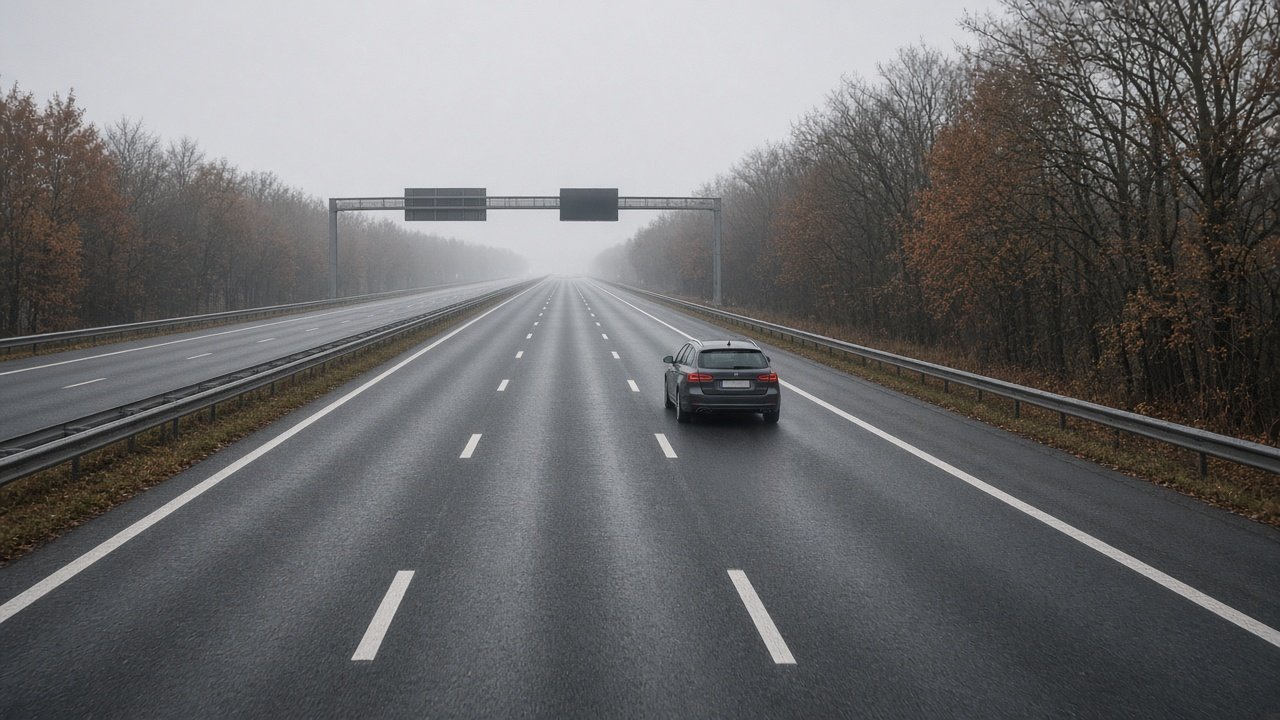
Picture a Belgian motorway without a single car, with cyclists and horse riders on the tarmac. This was Belgium on Sunday 18 November 1973, the first state-imposed “car-free Sunday”. Fifty-three years later, with diesel still above €2.30 a litre, the comparison is anything but idle nostalgia.
1973: a war, an embargo and oil prices up fourfold
The Yom Kippur War broke out on 6 October 1973. In retaliation for Western support for Israel, Arab OPEC members imposed an oil embargo. Between October 1973 and March 1974, a barrel rose from $2.59 to $11.65, Moniteur Automobile recalls. A litre of petrol cost the equivalent of about 24 euro cents at the time.
Belgium acted fast: 100 km/h on motorways and 80 km/h on main roads, street lights switched off, heating capped in offices, and car-free Sundays from 18 November 1973 to 13 January 1974. The first one reportedly saved more than 10 million litres of fuel. The “temporary” 100 km/h limit was only lifted on 28 February 1974. In the Netherlands, directly targeted by the embargo, the Sunday driving ban started on 4 November 1973 and petrol was rationed.
2026: the same script, diesel edition
The parallel is striking. According to the International Energy Agency (IEA), the war in Iran, which began on 28 February 2026, caused “the largest supply disruption in the history of the global oil market”. Shipping through the Strait of Hormuz, which normally carries around 20% of global oil consumption, slowed to a trickle. Brent crude peaked at $136 a barrel in early October.
It has since fallen to about $93, the IEA said on 13 November. But diesel is falling much more slowly and remains 77% above pre-war levels in Europe. In Belgium, the official maximum price of B7 diesel has been €2.332 a litre since 14 November, against €1.842 for 95 E10 petrol. The record of €2.51 was set on 28 October.
Will car-free Sundays come back?
Not for now. In March, the IEA published ten emergency measures to cut oil use. A Sunday driving ban is not one of them, but some ideas sound familiar: cutting motorway speed limits by at least 10 km/h, working from home where possible, alternating car access in big cities and car sharing. The 1973 toolbox, plus remote work.
What you can do today
- Belgium’s official price is a maximum: filling stations may sell for less, so compare before you fill up.
- Near the border, diesel remains much cheaper in Luxembourg: read Belgium diesel price vs Luxembourg.
- Ease off the accelerator: it is the IEA’s first tip for road users, and it is free. And from May 2027, budget for the Belgian road vignette too: check your price with our vignette price calculator.
Sources: Moniteur Automobile (French) · Connaître la Wallonie (French) · VAB Magazine (Dutch) · Nationaal Archief (Dutch) · IEA, 20 March 2026 · IEA Oil Market Report, November 2026 · FPS Economy, maximum prices · Autowijs (Dutch).